

Most video review software was built for marketing teams, not video production teams. That distinction matters more than most buying guides will tell you.
If you’ve ever tried to get a client to leave feedback in a tool that doesn’t support frame-accurate annotation, you already know the difference. They write “around 0:32” in an email. Your editor has to guess. You end up on revision round six because nobody could pinpoint the exact problem in the first place.
That’s not a tool problem. It’s a fundamental mismatch between what marketing collaboration software does and what a production workflow actually needs.
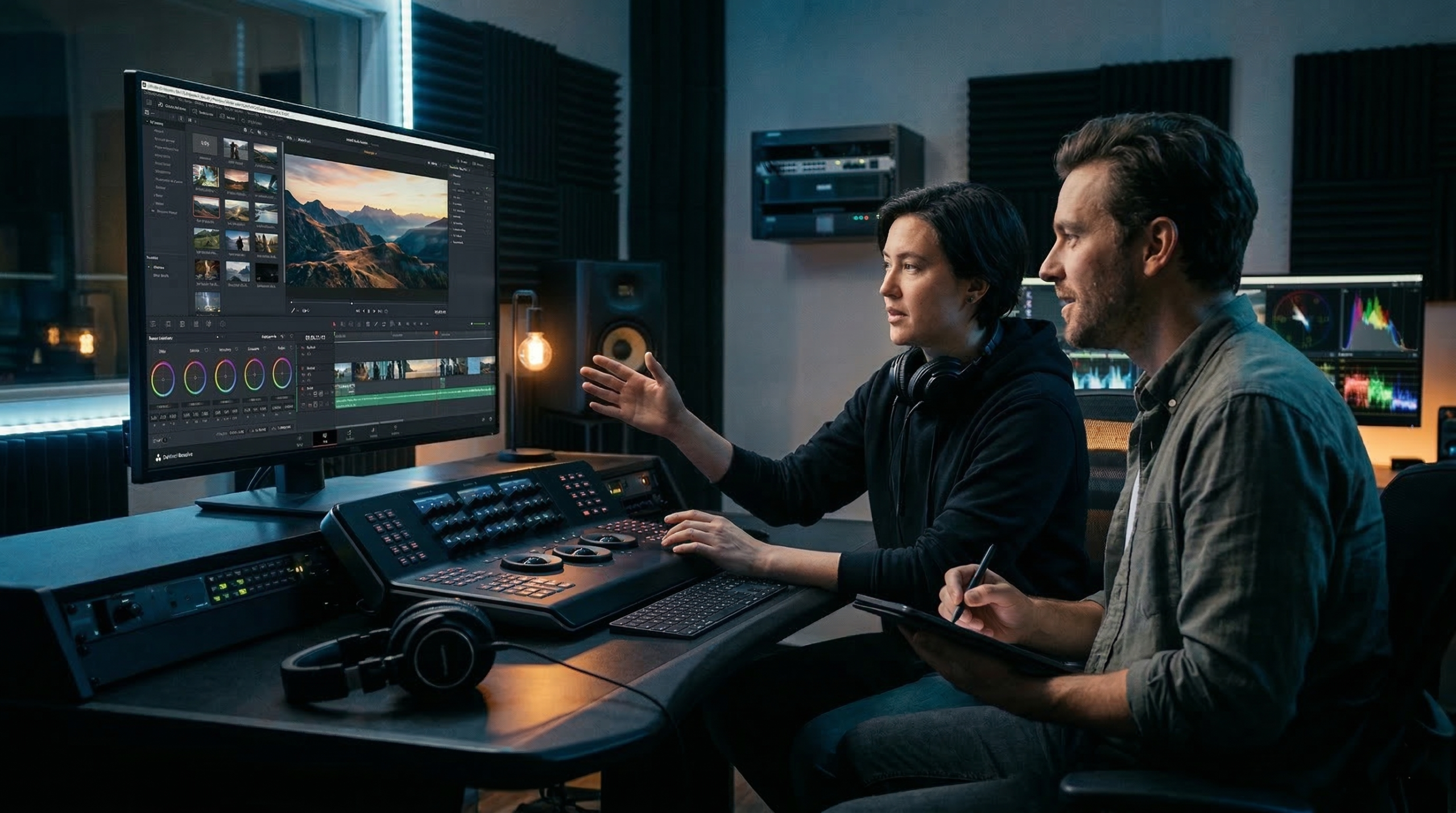
Before you dig in: if you found this article by searching “best video review software” and some results pointed you toward lists of video editing software, you’re not alone. That’s a common SERP mismatch. This guide is specifically about review and approval tools (platforms where your team and clients watch, annotate, and approve video assets), not editors like Premiere Pro or DaVinci Resolve.
Agree: You’ve probably tried at least one tool that sort of works. Maybe it handles comments. Maybe it has version history. But it doesn’t talk to your NLE, it charges you per reviewer seat, or it falls apart the moment you bring in a client who refuses to create another account for another platform. These aren’t edge cases. They’re the daily friction that slows every production team down.
Promise: This is an honest, production-team-focused breakdown of the seven best video review software options available in 2026, with real pricing math, clear feature comparisons, and a straight answer on which tool fits which kind of team.
Preview: We’ll cover what actually differentiates review tools for production teams (hint: it’s not the feature list), a side-by-side pricing table, full breakdowns of every tool, real cost math on the per-seat model, and a buying guide by team type.
If you want to jump straight to the numbers, see how costs compare on Krock.io’s pricing page, which includes a cost comparison calculator against Frame.io, Wipster, Filestage, and Ziflow.
What makes video review software actually work for production teams
Not all review tools are created equal, and the differences aren’t always obvious from a feature page. Here’s what separates tools built for real production workflows from tools that happen to support video.
Frame-accurate annotation (not just “comments”)
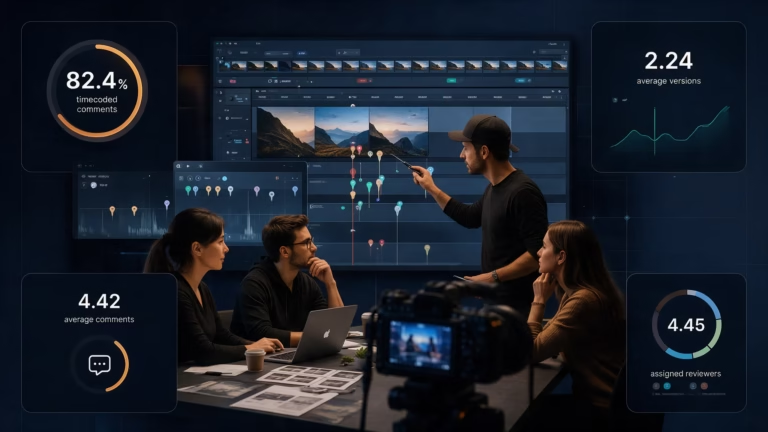
Leaving a comment at “around 0:32” is the enemy of efficient revision. Frame-accurate annotation means a reviewer clicks directly on the timeline at the exact second they mean, the comment is pinned to that timestamp, and your editor sees exactly what needs to change.
This sounds obvious, but several tools on this list implement it inconsistently, and some only allow text comments without any ability to draw on the frame itself. Drawing directly on a frame (circling the logo placement, crossing out text, marking a cut point) cuts revision rounds more than any other single feature. Without it, you’re still translating client feedback into edits, which means more rounds, more confusion, and more of your time.
The reviewer seat model (and its hidden costs)
This is where most production teams get burned. Many tools charge per seat, and every person who needs to view or comment on a video counts as a paid user. For an agency managing ten clients, that cost compounds fast.
Consider a real scenario: a video producer at a mid-size agency is using a per-seat review platform. A new campaign has seven stakeholders on the client side who all need to approve the final cut. She adds them all to the project. The next billing statement is $175 higher than expected. She didn’t realize that external reviewers counted as paid users. She removes half of them and reroutes feedback through one client contact, which adds two extra revision rounds because the real decision-maker never got to see the cut directly.
Unlimited reviewers (where external clients and stakeholders never need a paid seat) isn’t a nice-to-have for agencies and production companies. It’s a fundamental requirement that changes how you structure your approval process.
Storage for real video workflows
Marketing tools advertise storage in gigabytes. Production teams think in terabytes. A single 4K project with multiple versions and audio stems can exceed 100 GB on its own. If your review platform caps you at 50 GB or 100 GB total, you’re constantly managing deletion just to keep the tool usable. That defeats the purpose of having version history.
Pre-production integration
Most review tools start at the rough cut stage. But production teams start planning long before that: storyboards, animatics, concept frames. A platform that connects pre-production review to post-production review means you can get client alignment on concept before a single frame is rendered. That alignment prevents the most expensive kind of revision: the one that requires reshooting or re-animating.
Integrations with your editing tools
If uploading a new version means manually exporting, re-uploading, and reorganizing comments, teams will stop doing it consistently. Native integration with Adobe Creative Cloud, DaVinci Resolve Studio, and Final Cut Pro means your editor can push a new version directly from the timeline without leaving their editing environment.
Quick comparison: best video review software in 2026
| Tool | 10 users/mo | Storage | Unlimited reviewers | Free plan |
|---|---|---|---|---|
| Krock.io | $100 | 2 TB+ | Yes | Yes |
| Frame.io | $150–$250 | 3 TB | No | Yes (2 GB, 2 users) |
| Wipster | ~$250 | 250 GB | No | No |
| Filestage | $129 (10 projects cap) | 1 TB | Yes | Yes |
| Vimeo Review | ~$200 | 100 GB | No | Yes (1 GB) |
| Dropbox Replay | ~$120 (add-on) | Dropbox plan | No | No |
| SyncSketch | ~$120 | 50 GB | No | Yes (1 GB) |
Best video review software: full breakdown
1. Krock.io: best for video production and animation teams
Krock.io is purpose-built for creative production teams, and the difference shows immediately in the feature set. It covers the full creative pipeline, from storyboarding and animatics through frame-accurate video review, audio annotation, version management, and final approval. All in one platform.
Frame-accurate annotation and drawing tools
Reviewers can click directly on the video timeline to leave time-coded comments, draw annotations directly on frames, and @mention specific team members to route feedback to the right person. Comments resolve cleanly when addressed, so your team always knows what’s open and what’s done. This isn’t just better UX. It’s the difference between a revision note that says “tighten the cut between scenes two and three at 1:14” and one that says “the edit feels off in the middle somewhere.”
Audio waveform annotation
Krock.io is one of the only review platforms that supports time-coded comments directly on audio waveforms. For teams doing voiceover review, sound design feedback, or music licensing approvals, this means clients can pinpoint an exact second on a waveform rather than writing “the music feels too loud around halfway through.” This feature is absent from nearly every competing platform.
Unlimited reviewers on every plan
External clients never need a paid seat on any Krock.io plan. You send a link, they click it, and they’re in. No account required. For an agency with 20 clients each sending five stakeholders to review a quarterly campaign, that’s the difference between a tool that scales with your business and one that penalizes you for having more clients.
Storyboard creator and animatic review
Krock.io is the only dedicated video review platform that extends upstream into pre-production. The built-in storyboard creator lets your team build and share storyboards for client review before production begins. Teams can also upload animatics for review using the same frame-accurate annotation tools. For animation studios, this means a single platform handles concept approval, animatic sign-off, rough cut review, and final delivery, with all feedback and version history preserved in one place.
A team that switched from Wipster to Krock.io
Animade, the London-based animation studio, was running their review process across multiple tools: one for storyboards, one for video review, another for client approvals. After switching to Krock.io, they consolidated into a single platform. The impact was immediate: version confusion dropped because every stakeholder was looking at the same timeline of versions and comments, and the storyboard-to-animatic-to-final-cut continuity meant clients were aligned on concept before animation began, not after.
Integrations and storage
Krock.io integrates natively with Adobe Creative Cloud, DaVinci Resolve Studio, Final Cut Pro, and Slack. Storage starts at 2 TB+ on the Pro plan, which is more than enough for most production teams managing multiple active projects with multiple versions each.
Pricing
- Free plan: 1 user, two projects, 2 GB storage, unlimited reviewers
- Pro: $10/user/month (10 users = $100/month), 4K playback, full integrations
- Unlimited: $400/month flat, for teams that want predictable costs at scale
Start your 7-day free trial. No credit card required.
Who it’s for: Video agencies, animation studios, production companies, and any creative team that runs a real production pipeline from concept to delivery. Krock.io is also the strongest option for teams looking for Frame.io alternatives that don’t require an Adobe subscription to get full value.
Pros:
- Unlimited reviewers on all plans, no client seat fees
- Audio waveform annotation (unique in this category)
- Pre-production storyboard and animatic review
- Adobe Creative Cloud, DaVinci Resolve Studio, and Final Cut Pro integrations
- $100/month for 10 users is the best per-seat value in the category
- No login required for external reviewers
Cons:
- Storyboard AI is a newer feature; some animation workflows may need more sophisticated pre-production tooling
- Fewer third-party integrations than Frame.io for Adobe-exclusive shops
2. Frame.io: best for Adobe post-production workflows
Frame.io is the most widely recognized name in professional video review software, and for teams that live inside Adobe Creative Cloud, it earns that reputation. The Adobe acquisition brought deep integration with Premiere Pro and After Effects, including the ability to push new versions directly from the timeline to a Frame.io review link without leaving the editor.
Frame-accurate annotation and collaboration
Frame.io handles frame-accurate annotation well. Reviewers can leave time-coded comments, and editors see them directly inside Premiere Pro if they’re using the native panel. The collaboration model is solid for internal post-production teams. However, the external reviewer experience is where the cost model creates friction: every person who needs to leave a comment needs a paid seat, which means agencies inviting multiple client stakeholders will see costs escalate quickly.
Pricing and storage
Frame.io runs $15–$25/user/month depending on the plan. At 10 users, that’s $150–$250/month, which is 50–150% more than Krock.io for the same headcount. Storage is strong at 3 TB, making it suitable for high-volume post-production work. The free plan covers 2 users and 2 GB, which is enough for a quick trial but not for real production.
What it doesn’t do
Frame.io has no storyboard or pre-production tools. There’s no audio waveform annotation. And critically, it has no unlimited reviewer model. If you need external clients to leave feedback, they’re on the meter. Teams who want a detailed, side-by-side look at the differences should read how Krock.io compares to Frame.io.
Who it’s for: Post-production houses and editors who are already fully committed to the Adobe ecosystem and primarily do internal team collaboration rather than external client review at scale.
Pros:
- Deep Adobe Creative Cloud integration (Premiere Pro, After Effects)
- Strong frame-accurate annotation
- 3 TB storage
- Well-known brand with good enterprise support
Cons:
- Per-seat pricing for external reviewers adds up fast for agencies
- No storyboard or pre-production tooling
- No audio waveform annotation
- Adobe-centric integrations limit usefulness outside Premiere/After Effects workflows
- 10 users cost $150–$250/month vs. $100/month on Krock.io
3. Wipster: best for small video teams
Wipster has been a staple in the video review software space for over a decade, and it handles the core use case reliably: sharing a video, collecting time-coded comments, managing versions. The interface is clean and approachable, and clients generally find it easy to use without much onboarding.
Core features
Wipster supports time-coded commenting and version history, and it integrates with Adobe Premiere Pro and Creative Cloud. For small teams with straightforward workflows and a predictable number of reviewers, it does the job without much complexity.
Where it falls short
Wipster’s storage cap of 250 GB is a real limitation for production teams working with 4K files and multiple project versions. At 10 users, the cost runs approximately $250/month, making it one of the more expensive options relative to what it offers. There’s no free plan, no storyboard tool, no audio waveform annotation, and no unlimited reviewer model. As teams grow or take on more clients, the per-seat cost for external reviewers becomes a meaningful line item.
Pricing
Entry price is $11.95/month, but for a team of 10 with client reviewers, costs approach $250/month. No free plan is available.
Who it’s for: Small video teams with a stable, limited number of reviewers and straightforward post-production workflows that don’t involve animation or audio-specific review.
Pros:
- Clean, approachable interface
- Adobe Creative Cloud integration
- Solid version history
Cons:
- 250 GB storage cap is tight for professional video production
- No free plan
- No unlimited reviewers
- 10-user cost is among the highest in the category at ~$250/month
- No storyboard, animatic, or audio annotation tools
4. Filestage: best for marketing teams with mixed assets
Filestage takes a broader approach to online proofing. It handles video, PDF, image, audio, and web content review in one platform. For marketing teams that manage campaigns across multiple formats and need one tool to cover all asset types, this is a genuine advantage.
Review and approval workflow
Filestage’s review workflow is structured around stages and approval gates, which works well for multi-step approval processes where creative, legal, and brand teams each need to sign off sequentially. Unlimited users can review without a paid seat, which is a meaningful cost advantage for agencies managing many client contacts.
Limitations
The $129/month base price covers 10 projects, not 10 users. If your team runs more than 10 active projects simultaneously, you’ll need to upgrade to a higher plan. Storage is capped at 1 TB. Filestage doesn’t have storyboard or pre-production tools, and its video annotation features, while functional, are less specialized than platforms built exclusively for video review. There’s no audio waveform annotation.
Who it’s for: Marketing agencies and brand teams managing multi-format campaigns with multiple stakeholders across video, documents, and images, where the variety of asset types matters more than depth of video-specific features.
Pros:
- Multi-format review (video, PDF, image, audio, web)
- Unlimited reviewers
- Structured approval stages
- Free plan available
Cons:
- $129/month base limits you to 10 projects (not 10 users)
- Less specialized for video production than dedicated video review tools
- No storyboard or pre-production features
- No audio waveform annotation
- 1 TB storage cap
5. Vimeo Review: best for teams already on Vimeo
Vimeo Review is the lightest-touch option on this list. If your team already uses Vimeo for video hosting and distribution, the review layer built into Vimeo’s paid plans adds basic annotation and feedback collection on top of your existing hosting workflow.
What it does well
Vimeo Review supports time-coded comments and allows you to share a private review link with clients. The interface is familiar if your clients already know Vimeo. For freelancers or very small teams who just need a simple feedback loop on top of their hosting platform, it’s a logical choice.
Where it struggles
Vimeo Review is not a full review and approval platform. There’s no structured approval workflow, no version comparison tool that shows comment threads across versions, and no unlimited reviewer model. Plans start at approximately $20/user/month, and storage caps out at 100 GB, which is limiting for professional video production work. Vimeo’s strength is distribution; its review features are an add-on, not a core product.
Who it’s for: Freelancers and very small teams who are already paying for Vimeo and want a basic feedback layer without adopting a second tool.
Pros:
- Integrated with Vimeo hosting
- Simple, low-friction client experience
- Time-coded comments
Cons:
- 100 GB storage cap
- No approval workflow or version management
- Per-seat pricing with no unlimited reviewer model
- Not purpose-built for review; review features are secondary to hosting
- ~$200/month for 10 users is high for the feature set
6. Dropbox Replay: best for existing Dropbox users
Dropbox Replay is an add-on to existing Dropbox Business plans that enables video review and annotation directly within Dropbox’s interface. If your team already stores production files in Dropbox and wants to add a review layer without migrating to a new platform, it’s a reasonable option.
Feature set
Dropbox Replay supports time-coded comments, frame-by-frame annotation, and version history. A notable standout is dynamic watermarking, which lets you add visible watermarks to shared videos to track who might be leaking a pre-release cut. It’s useful for projects with NDAs or distribution concerns.
Limitations
The $12/user/month add-on price is on top of your existing Dropbox subscription, bringing the real cost closer to $120/month for 10 users (add-on only). The tool doesn’t have unlimited reviewers, no storyboard or pre-production tools, no audio waveform annotation, and the review features are more limited than dedicated platforms. Storage depends entirely on your Dropbox plan, which can be both an advantage (if you’re already paying for storage) and a complication (if you need to expand).
Who it’s for: Teams already paying for Dropbox Business who want to avoid adopting a new platform and who value keeping production files and review in the same environment.
Pros:
- Integrates directly with existing Dropbox storage
- Dynamic watermarking for sensitive content
- Time-coded comments and frame annotation
Cons:
- Requires an existing Dropbox subscription; this is an add-on, not a standalone tool
- No unlimited reviewers
- No storyboard or pre-production features
- No audio waveform annotation
- Feature set is less comprehensive than dedicated review platforms
7. SyncSketch: best for animation and VFX pipelines
SyncSketch is the specialist tool on this list. Built specifically for animation and visual effects teams, it has features that no other platform offers: real-time synchronized playback, where multiple reviewers watch the same frame simultaneously in a shared session, and native support for review formats common in VFX pipelines (EXR sequences, image sequences, multi-layer files).
Real-time sync and VFX-specific features
The synchronized playback feature is genuinely useful for distributed animation teams doing live review sessions, where a director in one city and an animator in another need to watch the same frame at the same moment and discuss it in real time. SyncSketch also handles image sequence review (a format used heavily in VFX for reviewing shots frame-by-frame before compositing), which no other tool on this list supports natively.
Limitations
SyncSketch’s storage cap of 50 GB is extremely tight for the type of work its target users produce. VFX and animation files are large; 50 GB gets consumed quickly. The per-seat model has no unlimited reviewer option, and at $12/user/month for 10 users, cost is ~$120/month before accounting for potential overages. The platform is narrowly focused on review and lacks project management features, storyboard tools, or broad integration with editing software beyond its core use case.
Who it’s for: Animation studios and VFX teams doing live collaborative review sessions or working with image sequence formats, specifically those who need the real-time sync playback feature or EXR/image sequence support.
Pros:
- Real-time synchronized playback for live review sessions
- Image sequence and EXR format support
- Purpose-built for animation and VFX workflows
- Free plan (1 GB storage)
Cons:
- 50 GB storage cap is severely limiting for VFX production
- No unlimited reviewers
- No storyboard or pre-production tools
- Narrowly focused; not suitable for general video production or mixed-format review
- No audio waveform annotation
How much does video review software actually cost?
The sticker price and the real price are often very different in this category. Here’s what you actually need to calculate before choosing a platform.
Per-seat vs. flat-fee pricing
Most video review tools charge per seat, meaning every person on your team who needs an account costs you money. Krock.io Pro is $10/user/month. Frame.io is $15–$25/user/month. For internal team members, this math is straightforward.
The complication comes with external reviewers. At tools without an unlimited reviewer model, every client stakeholder who needs to view and comment on your work may count as a paid user. An agency with 15 active clients, each with three or four people who need to approve final cuts, could be looking at 60+ paid reviewer seats. That’s an expense that has nothing to do with their own team size.
Krock.io’s unlimited reviewer model and Filestage’s unlimited user model both solve this problem differently. Krock.io does it without requiring any login at all (share a link, client comments), which removes friction from the client experience entirely.
The $400/month flat Unlimited plan on Krock.io is designed for larger agencies or studios where headcount is harder to predict. Flat pricing means your monthly cost doesn’t change whether you onboard five new team members or add 20 new client reviewers.
Real 10-user math
Let’s be specific. For a team of 10 internal users across each platform:
- Krock.io Pro: $100/month (plus unlimited external reviewers at no cost)
- Frame.io: $150–$250/month (plus per-seat cost for external reviewers)
- Wipster: ~$250/month (plus per-seat cost for external reviewers)
- Filestage: $129/month, but this is project-limited, not user-limited
- Vimeo Review: ~$200/month (plus per-seat cost for external reviewers)
- Dropbox Replay: ~$120/month add-on (on top of your Dropbox subscription)
- SyncSketch: ~$120/month (plus per-seat cost for external reviewers)
For an agency running 10+ active client relationships, the “plus external reviewers” cost on per-seat platforms adds substantially to those numbers. The real monthly cost at Frame.io or Wipster for a busy agency could be two to three times the headline figure.
The hidden cost of reviewer seat fees
Beyond the dollar amount, per-seat reviewer pricing changes your behavior in ways that hurt quality. Teams start limiting who gets invited to review. Clients get routed through a single point of contact instead of giving feedback directly. The creative director never sees the cut until it’s already been approved by a junior contact. These aren’t hypotheticals. They’re the predictable consequences of a pricing model that penalizes inclusion.
For online proofing for creative teams that involves external clients, unlimited reviewers isn’t just a cost question. It’s a workflow quality question.
How to choose the right video review software
The best tool depends on who you are, how your team works, and what your approval process actually looks like.
For video agencies
You need unlimited reviewers, no exceptions. Your clients are external, their stakeholders are external, and the number of people who touch a single campaign approval can easily exceed your internal team size. You also need reliable version history so that when a client asks “what changed between v3 and v5,” you can show them in seconds instead of digging through email threads.
Best fit: Krock.io (unlimited reviewers, $100/month for 10 users, full version history) or Filestage (unlimited users, good for multi-format campaigns). If your agency is Adobe-exclusive in its post-production workflow, Frame.io is worth considering despite the reviewer seat cost.
For animation studios
Pre-production matters as much as post. You need storyboard and animatic review in the same platform as your video review, because getting client alignment on concept prevents the most expensive revisions. Audio annotation matters for sound design and music approval. And your storage needs are high.
Best fit: Krock.io. It’s the only platform with storyboard, animatic, video, and audio waveform review in one place. For studios doing heavy VFX work with EXR sequences and live sync review sessions, SyncSketch is worth evaluating as a supplemental tool despite its storage limitations.
For freelancers
You probably don’t need 2 TB of storage or unlimited reviewers across 20 clients. You need something that makes it easy for one or two clients to leave feedback without creating an account, and something affordable enough to justify on a solo budget.
Best fit: Krock.io’s free plan (one user, two projects, unlimited reviewers) covers most freelance needs at zero cost. Vimeo Review is a reasonable secondary option if you’re already paying for Vimeo hosting.
For marketing teams
You’re likely reviewing multiple asset types (video, PDF, image, copy) and your approval chain may involve legal, brand, and external stakeholders. Deep video-specific features like audio waveform annotation and storyboard review are probably less important than broad format support and structured approval workflows.
Best fit: Filestage handles multi-format review well and includes structured approval stages. Krock.io is also a strong option if video is your primary format, and its unlimited reviewer model handles the multi-stakeholder approval chains that marketing campaigns typically involve.
If you’re evaluating options against a specific platform, the Ziflow alternative comparison covers how Krock.io stacks up for teams considering Ziflow’s feature set.
Frequently asked questions
What is video review software?
Video review software is a platform where teams share video files with internal collaborators and external clients, collect time-coded annotations and comments directly on the video timeline, manage version history, and track approval status through a structured workflow. It is distinct from video editing software (like Premiere Pro or DaVinci Resolve), which is used to create and edit video. Review software handles the approval process after a cut is made, not the cutting itself.
Is there a free video review tool?
Yes. Several tools on this list have free plans. Krock.io’s free plan supports one user, two projects, 2 GB storage, and unlimited external reviewers, which makes it genuinely useful for freelancers or small teams, not just a demo. Frame.io has a free plan for two users with 2 GB storage. SyncSketch and Vimeo both offer free tiers with 1 GB storage each. Wipster and Dropbox Replay have no free plans.
How is video review software different from video editing software?
Video editing software (Adobe Premiere Pro, DaVinci Resolve, Final Cut Pro) is where editors cut, color, and composite footage. Video review software is where finished or in-progress cuts are shared for feedback, annotation, and approval. Many production teams use both: they edit in their NLE and share for review through a dedicated review platform. The best video review tools integrate directly with editing software, allowing editors to push new versions from their timeline without switching contexts.
Do clients need an account to leave feedback?
It depends on the tool. Most platforms require external reviewers to create a free account before they can leave comments. Krock.io does not: reviewers receive a link, click it, and can comment immediately without signing up for anything. This matters because client friction at the review stage (“I don’t want to create another account”) is one of the most common reasons feedback comes in late, off-platform, or not at all.
Picking the right tool comes down to one question
Here’s the workflow scenario that clarifies everything: imagine your next project. Count how many people from outside your team need to approve it. Now check whether the platform you’re considering charges those people as paid seats.
If it does, you’ll either pay a lot more than the headline price, or you’ll start routing feedback in ways that add revision rounds. Neither is a good outcome.
A well-run production team at an agency moved from a per-seat tool to Krock.io specifically because of this math. Their average project had four to six client-side reviewers. At their previous tool, that meant $60–$90/month per project in external seat fees. After switching, that cost dropped to zero. Because all six reviewers could actually watch and annotate directly, the average revision rounds per project dropped from 4.2 to 2.6. That’s a measurable workflow improvement from a pricing model change. For the process behind those numbers, the guide to managing client video revisions walks through how to structure rounds, consolidate feedback, and handle scope creep.
For production teams, the best video review software isn’t the one with the longest feature list. It’s the one that fits your actual approval process: the number of reviewers, the type of assets, the integrations with your editing tools, and the storage scale of your real projects.
Krock.io offers a 7-day free trial on all paid plans, no credit card required. If you’re running a video agency, animation studio, or production team, it’s worth taking a look at what a full pipeline review tool, from storyboard to final approval, actually feels like in practice.
Start your free trial at Krock.io and see if it fits your workflow. If you want to compare costs specifically against Frame.io, Wipster, Filestage, or Ziflow before you start, Krock.io’s pricing page has a side-by-side cost calculator.
Also comparing tools from a collaboration angle? The guide to video collaboration tools for creative teams covers how purpose-built video review platforms differ from general collaboration software like Slack and Dropbox, with side-by-side pricing and NLE integration data across the main platforms.