


Quote a corporate video job at $400 and you might be leaving $600 on the table. Quote it at $1,500 and you might never hear back. Freelance videographer rates vary so widely that even experienced shooters second-guess their numbers before hitting send on a proposal.
You’re not wrong to feel that way. Videography pricing depends on experience, project type, location, and how much revision work gets buried in the quote. But there are real benchmarks, and once you see them side by side, setting your own rate gets a lot less stressful.
This guide breaks down freelance videographer rates by experience level, project type, and pricing model, using current data from industry pricing guides and Krock.io’s own production research. By the end, you’ll have a rate range you can defend in a client call, plus a framework for raising your prices without losing work.
TL; DR
- Freelance videographers typically charge $25–$75/hour as beginners, $75–$200/hour at the intermediate level, and $200–$500+/hour as specialists.
- Day rates run from about $150/day for beginners to $350–$500/day for experienced shooters, often with separate editing fees.
- Project-based corporate videos range from $1,500 to $50,000+, depending on scope, crew size, and deliverables.
- Unpaid revision rounds are one of the most common ways freelancers quietly lose money on a quoted rate.
How much does a videographer cost?
A freelance videographer typically costs between $25 and $500 per hour, depending on experience and project complexity. Beginners charge $25–$75/hour, mid-level videographers charge $75–$200/hour, and specialists with high-end equipment or niche expertise charge $200–$500 or more per hour, according to industry pricing data from Vidico.
These figures line up closely with typical videographer rates reported across the industry, and they form a useful baseline for video production rates more broadly. For a quick reference, here’s how those rates break down:
| Experience level | Hourly rate | Typical day rate |
|---|---|---|
| Beginner | $25–$75 | ~$150–$200 |
| Intermediate | $75–$200 | ~$300–$400 |
| Specialist / expert | $200–$500+ | ~$500+ |
Day rates often cover filming only, with editing billed separately or bundled into a project fee. If a videographer also edits the footage, expect the day rate to run higher to account for the extra hours.
Freelance videographer rates by experience level
Experience is the single biggest driver of freelance videographer rates. A videographer with two years of weekend wedding gigs and one with ten years of agency-level corporate work aren’t competing for the same clients, and they shouldn’t be charging the same price.
Beginner videographer rates
New freelancers typically charge $25–$75 per hour or around $150–$200 per day, according to Peerspace’s videography pricing guide. At this stage, most videographers are still building a reel, so lower rates help land the first handful of paid projects.
The risk at this level isn’t charging too little for any single job. It’s anchoring your rate so low that raising it later feels impossible. Treat your first few projects as portfolio-builders with a plan to increase your rate every few months.
Mid-level videographer rates
Once you’ve delivered 10–20 paid projects and built a reel that shows range, rates typically move to $75–$200 per hour or $300–$400 per day. At this point, you’re likely shooting with your own gear, handling basic color correction, and managing client communication without much hand-holding.
This is also where unpaid revisions start to bite. A mid-level videographer billing $150/hour loses $150 in opportunity cost for every hour spent on a fourth or fifth round of “just one more small change.”
Senior and specialist videographer rates
Experienced videographers with a specialty (drone work, cinema cameras, corporate brand work, or live event production) charge $200–$500 or more per hour. Project-based work at this level often runs into the thousands, especially for multi-day shoots with crew.
For perspective, the U.S. Bureau of Labor Statistics reports a median annual wage of $83,210 for camera operators in television, video, and film as of May 2025 (see the BLS Occupational Outlook Handbook). That works out to roughly $40 per hour for a salaried employee. Freelance videographer rates per hour typically run well above that baseline, since freelancers also cover self-employment taxes, gear, insurance, and downtime between projects.
Want to see how editors price similar work? Our video editor rates guide breaks down post-production pricing by the same experience tiers, useful if you handle both shooting and editing.
Videographer rates by project type
Experience sets your baseline, but project type determines the final number on the invoice. A two-hour event recap and a multi-day brand campaign require very different time investments, even at the same hourly rate.
| Project type | Typical range | Notes |
|---|---|---|
| Corporate and brand videos | $1,500–$50,000+ | Scope varies hugely by crew size, locations, and deliverables |
| Weddings and events | $500–$15,000 | Often priced as a day rate plus a tiered editing package |
| Social media and short-form content | $300–$2,500 | Frequently sold as monthly retainers for recurring content |
| Marketing and promotional videos | $2,000–$25,000+ | Higher end includes scripting, multiple locations, and motion graphics |
Corporate and brand videos
Corporate clients typically pay for polish, reliability, and a finished product that fits their brand guidelines. A single-location interview-style video might run $1,500–$5,000, while a multi-day campaign with crew, locations, and motion graphics can reach $50,000 or more, according to Vidico’s pricing breakdown.
Weddings and events
Wedding videography is one of the few areas where freelancers commonly publish their rates outright. Beginners might charge $500–$1,500 for a half-day shoot with a basic highlight reel, while experienced wedding videographers charge $3,000–$15,000 for full-day coverage with multiple cameras and a longer edited film.
Here’s where the math gets tricky: a couple who books a $2,000 wedding package and then asks for four separate rounds of edits on their highlight reel can turn a profitable booking into a break-even one. More on that in the factors section below.
Social media and short-form content
Brands producing a steady stream of short-form video often hire freelancers on retainer rather than per project. A retainer covering four to eight short videos per month might run $1,000–$2,500, depending on shoot complexity and turnaround expectations.
Marketing and promotional videos
Promotional videos sit between corporate and social content in scope. A 60- to 90-second promo with scripting, a half-day shoot, and basic motion graphics typically runs $2,000–$10,000, with larger campaigns climbing past $25,000.
Hourly, day rate, or project-based: which pricing model should you use?
Most freelance videographers use one of three pricing models, and each one shifts the risk between you and the client differently.
Hourly pricing works best for short, well-defined jobs where scope rarely changes, like a one-hour product shoot. The downside: clients sometimes try to negotiate the hourly number down without understanding what’s included.
Day rates are the industry standard for shoots that run four hours or more. Freelance videographer day rates commonly fall between $150 and $500 or more depending on experience, and typically cover filming only, with editing quoted separately. This is the model most wedding and event videographers use, and it’s the easiest for clients to compare across freelancers.
Project-based pricing bundles everything (pre-production, shooting, and editing) into a single number. It’s harder to calculate upfront, but it protects you from scope creep eating into an hourly rate, as long as the project includes a defined number of revision rounds.
Mini-story: Jordan’s flat-rate lesson. Jordan, a freelance videographer in Austin, quoted a local restaurant chain $1,800 for a “simple” promo video in early 2026. The quote didn’t specify a revision limit. By the time the client approved a final cut, Jordan had delivered six rounds of edits across three weeks, each one a “small tweak” that took 45 minutes to an hour. The effective hourly rate dropped from a planned $90/hour to under $40/hour. Jordan’s next contract included a line capping revisions at two rounds, with additional rounds billed at $75/hour.
What factors affect freelance videographer pricing?
Six factors consistently move freelance videographer rates up or down:
- Experience and reel quality. A stronger portfolio justifies a higher rate even for similar project types.
- Equipment. Cinema cameras, drones, and lighting kits represent real overhead that should be reflected in the price.
- Location and travel. Rates in major metro areas tend to run higher, and travel time should be billed separately.
- Scope and deliverables. A 30-second social cut and a 10-minute corporate video require very different time investments, even from the same footage.
- Turnaround time. Rush deliveries (48 hours or less) typically carry a premium of 25–50% over standard turnaround.
- Revision rounds. This is the factor freelancers underestimate most often, and it’s worth a closer look.
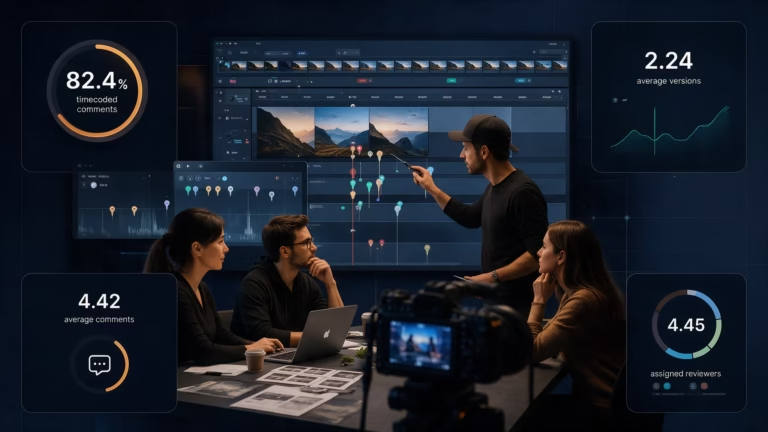
Most quotes assume two to three rounds of revisions. Krock.io’s platform data, covered in our video production statistics, shows the average reviewed file goes through 2.24 versions and collects 4.42 comments. For a freelancer billing project-based work, every round past what you quoted is unpaid time, so cap revision rounds in the contract.
The problem usually isn’t that clients ask for too much. It’s that feedback arrives scattered across email threads, text messages, and the occasional voice memo, so revision requests get duplicated, missed, or revisited after you thought a cut was locked. A creative review and approval process that centralizes feedback in one place helps keep revision rounds inside what you actually quoted.
See how centralized feedback works in practice. Online proofing for creative teams shows how time-coded comments on a single shared link keep revision requests organized, so “round three” doesn’t quietly become “round six.”
How to set (and raise) your freelance videographer rate
Setting a rate that holds up under client pushback comes down to four steps:
- Calculate your cost of doing business. Add up gear depreciation, insurance, software subscriptions, and the income tax rate self-employed videographers pay on top of a salaried equivalent.
- Research rates in your market and niche. Use the ranges in this guide as a starting point, then check what videographers with a similar reel charge in your city or specialty.
- Build revision limits into every quote. State the number of included revision rounds in writing, and set a per-round rate for anything beyond that.
- Raise your rate on a schedule, not just when you feel ready. A 10–15% increase every six to twelve months, applied to new clients first, keeps your pricing aligned with your growing reel without alienating existing relationships.
Mini-story: Priya’s wedding season pivot. Priya shot weddings for $1,200 per event throughout 2025, including unlimited revisions on the final highlight reel. After tracking her hours for a season, she found the “unlimited revisions” clause was adding six to eight unpaid hours per wedding during peak season. For 2026, she kept her $1,200 base rate but capped revisions at two rounds, with additional passes billed at $60/hour. Total bookings stayed flat. Average per-wedding profit went up by roughly $300.
Ready to keep your next project’s revisions on track? Start a free trial and centralize client feedback before your next shoot, no credit card required.
Freelance videographer rates FAQ
What is a good day rate for a freelance videographer?
A good day rate for a freelance videographer ranges from $150–$200 for beginners to $300–$500+ for experienced professionals, according to industry pricing data. Day rates typically cover filming only, with editing billed separately. Your specific rate should reflect your experience, equipment, and local market.
Do freelance videographers charge for travel?
Yes, most freelance videographers bill separately for travel time, mileage, and any travel-related expenses like flights or lodging for out-of-town shoots. Some build a flat travel fee into quotes for jobs within a set radius, then charge hourly or per-mile rates beyond that.
Should I charge hourly or per project as a videographer?
Charge hourly for short, well-defined jobs under four hours, and use day rates or project-based pricing for longer shoots. Project-based pricing works best when you can clearly define deliverables and revision limits upfront, since it protects your effective hourly rate from scope creep.
How much should I charge for a wedding video?
Wedding videography rates typically range from $500–$1,500 for basic half-day coverage to $3,000–$15,000 for full-day, multi-camera coverage with a longer edited film. Most wedding videographers price as a day rate plus a separate editing package, with revision limits clearly stated in the contract.
What should be included in a videography quote?
A videography quote should include the day rate or project fee, number of shooting hours, crew size, equipment used, number of revision rounds included, turnaround time, and any travel costs. Stating revision limits in writing protects both the freelancer’s time and the client’s budget expectations.
Setting rates that actually stick
Freelance videographer rates aren’t one-size-fits-all, but they aren’t a mystery either. Beginners typically land in the $25–$75/hour range, mid-level videographers charge $75–$200/hour, and specialists charge $200–$500 or more, with day rates and project pricing scaling accordingly based on project type.
The number on your invoice matters less than what’s included in it. A $1,200 wedding package with unlimited revisions can pay worse than a $1,000 package with two revision rounds clearly defined. Before your next quote goes out, decide how many rounds of feedback are included, and how you’ll track that feedback so it doesn’t quietly multiply.
If client feedback has been eating into your margins, explore Krock.io’s online proofing tools to see how centralized, time-coded comments keep revisions contained to what you actually quoted. And when you’re ready to deliver final files, check out 19 easy ways to share video files online for options that keep your client handoff as smooth as your shoot.