


A branded content strategy is a plan for creating content that delivers genuine value to an audience while advancing marketing objectives, without leading with an explicit sales message. Unlike traditional advertising, which interrupts the audience, branded content earns their attention by being useful, entertaining, or emotionally resonant in its own right.
TL;DR: A branded content strategy defines what value your content delivers to the audience before it says anything about your brand. The formula: find the intersection of audience interest and brand expertise → choose a format that matches the goal → measure brand lift and engagement depth, not advertising conversion metrics. Done right, branded content earns 4× the ROI of paid advertising.
Done well, branded content marketing outperforms advertising on almost every metric that matters for long-term brand building: trust, memorability, and purchase intent. Content marketing delivers an average ROI of $7.65 per $1 spent, compared to $1.80 for paid advertising. That is a 4x performance advantage that compounds as content accumulates over time, according to content marketing data from Taboola.
This guide covers what branded content actually is, why it works, what formats drive the most return, real campaign examples, and how production teams can manage the creation and approval process without losing quality to revision chaos.
What separates branded content from advertising
The distinction matters because it changes how you create and measure the work.
Traditional advertising interrupts. A pre-roll ad, a banner, a 30-second TV spot: these formats place themselves in the audience’s path and ask for a few seconds of attention in exchange for whatever they’re watching or reading. When a campaign needs a fresh visual, marketers can create a banner designed to capture attention without overwhelming the audience. The audience has no inherent reason to engage with the ad beyond its entertainment value.
Branded content earns its way in. A documentary that a sports brand funded about a lesser-known athlete. A recipe series created by a kitchen appliance company. A short-form video series about financial literacy published by a bank. In each case, the content has value independent of the brand message. People seek it out rather than tolerating it.
| Traditional advertising | Branded content | |
|---|---|---|
| Audience relationship | Interruption | Voluntary attention |
| Primary objective | Direct conversion | Trust + awareness |
| Success metric | Click-through, conversion | Engagement, brand lift |
| Shelf life | Campaign duration | Ongoing |
| Production lead time | Days to weeks | Weeks to months |
| Typical ROI | ~$1.80 per $1 | ~$7.65 per $1 |
The most effective branded content formats in 2026
Not all branded content formats deliver equal return. Wyzowl’s 2026 video marketing report found that 82% of marketers say video marketing has given them strong ROI, and 93% say video has increased brand awareness for their organization.
Short-form video is the highest-ROI format in 2026 for the third consecutive year. Videos under 60 seconds generate 2.5x more engagement per impression than any other content type. For branded content, short-form works best for product-in-context storytelling, creator collaborations, and episodic narrative formats. The best viral video marketing campaigns of recent years share one production discipline: they were iterated fast, reviewed tightly, and shipped before the moment passed.
Long-form documentary and editorial video builds deeper brand association and trust. A 10-minute branded documentary that genuinely tells a story earns the kind of emotional connection that 30-second spots rarely achieve. Higher production investment, higher payoff for brands playing a long game.
Branded editorial content (articles, guides, podcast series) builds authority over time. It ranks in search, generates backlinks, and attracts audiences in research mode. Best for B2B brands and categories where expertise is a purchase driver. For B2B SaaS companies, working with a specialized SaaS content marketing agency can help connect editorial content with SEO, brand authority, and qualified pipeline growth.
Interactive content (quizzes, calculators, assessments) generates high engagement and captures first-party data. Harder to produce but delivers strong lead generation results when the tool itself solves a real problem for the audience.
Creator partnerships and co-produced content have become one of the fastest-growing formats in branded content marketing. Rather than producing in-house, brands partner with creators who already have an established audience and authentic voice. The key is choosing creators whose audience genuinely overlaps with the brand’s target customer, and giving them real creative latitude. For a deeper look at how production teams handle the video side of these partnerships, see collaborating with influencers on video content. Audiences follow creators for their perspective; branded content that suppresses that perspective defeats the purpose of the partnership.
Choosing the right format for a branded content strategy isn’t a one-time decision. As platforms evolve and audience behavior shifts, the format mix needs to be revisited. A format that drove results in 2023 may not be the right choice now. Short-form video did not exist as a meaningful brand channel five years ago, and interactive content has only recently become accessible to teams without dedicated development resources.
Branded content examples that worked (and what made them effective)
Understanding how to create branded content at a high level is one thing. Seeing it executed well is another. These three campaigns are widely studied because they solved a real creative problem rather than just spending a budget.
Red Bull Stratos (2012). Red Bull funded Felix Baumgartner’s freefall from the stratosphere and streamed it live. The brand connection was immediate (“gives you wings” made literal), but the content worked because it was genuinely historic. Eight million people watched the live stream. The lesson: if your brand is legitimately aligned with a domain, go all the way. Half-measures produce content that looks sponsored. Full commitment produces content that gets covered as news.
Dove Real Beauty (2004 onwards). Dove’s campaign started with a study finding that only 2% of women described themselves as beautiful, then built years of content around that tension. The campaign wasn’t about soap. It was about a question the audience already had. Dove’s willingness to engage with it seriously built brand trust that advertising spend alone couldn’t replicate. The lesson: branded content doesn’t need to mention the product. It needs to earn a place in a conversation the audience cares about.
Spotify Wrapped (2016 onwards). Wrapped turned user listening data into personalized year-in-review content that people actively shared on social media. The genius is that Spotify’s users created the distribution. The brand provided the frame; the audience provided the reach. The lesson: the most scalable branded content makes the audience the protagonist. Their story, their data, their moment, shared in your format.
Each of these campaigns succeeded for different reasons, but they share a common thread: clear creative conviction at the brief stage, and a production process that didn’t let committee revisions erode that conviction before delivery.
How to develop a branded content strategy that works
Branded content strategy fails most often before a word is written or a frame is shot.
The most common failure: creating content around what the brand wants to say rather than what the audience wants to know or experience. Branded content that leads with brand message reads like an ad. Content that leads with audience value earns trust and incidentally builds brand affinity.

A working branded content strategy starts with three questions:
- What does our audience care about that we’re actually qualified to address? The intersection of audience interest and brand expertise is where effective branded content lives. A project management software company writing about productivity habits. A running shoe brand publishing training guides. Authentic expertise, not borrowed relevance.
- What format best serves this specific content goal? Educational goals often fit editorial or video. Entertainment goals often fit scripted short-form or documentary. Community goals often fit live content or podcast formats. Match the format to the objective, not to the brand’s production comfort zone.
- What does success look like in 6 months, not 6 days? Branded content builds over time. A single piece rarely delivers measurable ROI. Set measurement criteria around brand lift, engagement depth, organic reach growth, and audience retention. Not just immediate clicks.
How to measure branded content performance
Branded content requires different measurement than advertising, and confusing the two is one of the most common reasons teams undervalue it. The Content Marketing Institute’s annual research consistently finds that teams measuring content on direct-response metrics report lower satisfaction with content ROI than those using engagement and brand-lift benchmarks.
Direct conversion metrics (click-through rates, immediate purchases) are the wrong primary measure for most branded content. The goal is usually to build awareness, trust, or preference in an audience that isn’t ready to buy yet. Measuring that against click-through benchmarks built for direct-response advertising sets branded content up to look like it underperforms.
The right metrics depend on the content goal. For awareness content, the relevant measures are reach, view-through rate, and brand recall surveys. For authority-building editorial content, the relevant measures are organic search growth, time on page, and backlinks generated. For content designed to accelerate consideration, engagement depth and return visits matter more than first-session conversions.
One useful heuristic: if you’re creating branded content but only measuring it on advertising KPIs, the content will eventually be cut. Build the measurement framework before the content goes live, not after.
The art-commerce balance: what actually determines quality
The tension between artistic ambition and commercial requirements is real in branded content production, but it’s often misframed. The question isn’t “how much creative freedom can we give?” but “how do we align on goals clearly enough that the creative team can execute without constant course corrections?”
Most branded content problems (content that doesn’t feel authentic, that feels too much like an ad, that doesn’t connect) originate in a briefing and approval process that introduces commercial hedging at every revision round. A creative brief that’s vague produces content that could mean many things; a brand approval process that optimizes for “safe” produces content that says nothing.
High-performing branded content production teams share a few practices:
Align on creative direction before production starts. Using an AI storyboard maker to visualize the narrative direction before cameras roll or copy is written creates alignment that prevents the expensive late-stage revisions that kill creative quality.
Limit stakeholder input in the production phase. The brief-setting stage is when commercial objectives belong. Once production starts, unlimited stakeholder input fragments the creative vision. The most effective teams designate a single decision-maker for revision approval and limit rounds.
Separate internal debate from creator feedback. Marketing teams have internal disagreements about tone, product prominence, and brand voice. Those debates shouldn’t reach the creative team as a stream of contradictory notes. Online proofing for creative teams keeps internal discussion separate from the external brief. Creators get one consolidated, resolved set of feedback, not a log of internal deliberation.
Managing branded content production at scale
Agencies and in-house teams producing branded content at volume face a coordination challenge that grows with output: more assets, more stakeholders, more revision cycles, more opportunities for the wrong version to ship.
Consider a brand producing 12 episodic short-form videos per quarter for three different product lines. Each episode involves a creative brief, a production round, a stakeholder review, a client review, and a final approval. That’s a significant number of assets in review simultaneously, with different stakeholders at different stages on each piece.
The production management challenge at this scale isn’t creative. It’s logistical. Who reviewed what? Which version is current? Did the client approve the v2 edit or the v3? Did the legal review happen on the correct cut?
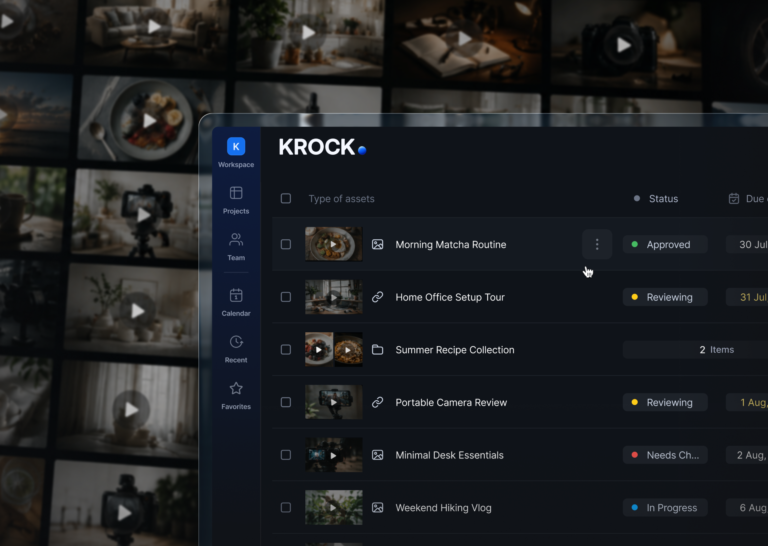
Video proofing built specifically for creative production keeps every asset in one place with a complete version history, role-based access (internal team sees everything; clients see only what’s shared), and a clear approval status per asset. The production manager knows at a glance what’s waiting for review and what’s cleared to deliver.
For agencies building the full branded content production stack, software for creative agencies covers the broader toolset: project management, asset delivery, and client collaboration alongside the review and approval workflow.
The ethical foundation of branded content
Transparency is not optional. Audiences can detect undisclosed advertising, and the backlash when branded content is exposed as unlabeled advertising damages both the brand and the creator relationship. Disclosure regulations in most major markets (FTC in the US, ASA in the UK, equivalent bodies elsewhere) require clear identification of paid content and sponsored partnerships.
Beyond regulatory compliance, transparency builds trust. Audiences who know content is brand-funded and still choose to engage with it are more valuable customers than those who feel deceived. The goal is content that’s worth watching or reading even when the brand relationship is fully disclosed.
The ethical bar for branded content also includes accuracy. Branded content that makes claims about product efficacy, health benefits, financial returns, or competitive comparisons is subject to the same accuracy standards as advertising. Build a review step for factual claims into every production workflow, not just the final approval.
Frequently asked questions about branded content strategy
What is the difference between branded content and content marketing?
Content marketing is an umbrella term for any content a brand creates to attract and retain an audience. Branded content is a specific format within that umbrella — one where the content is designed to work as a standalone entertainment or information product, with the brand’s role implicit rather than central. Content marketing includes SEO articles, email newsletters, and how-to guides. Branded content is closer to editorial media: documentaries, episodic series, data-driven reports, and long-form storytelling.
How long does it take to develop a branded content strategy?
A working branded content strategy can be defined in two to four weeks for a focused team: one week for audience research and format mapping, one week for goal-setting and measurement framework, and one to two weeks for brief development and stakeholder alignment. The more common problem is not the time to develop it, but the time lost to revision cycles during production. Teams that invest in a clear brief upfront typically cut production time by 30–40% compared to teams that try to resolve strategic questions during the edit.
What metrics should I use to measure branded content?
The right metrics depend on your content goal. For awareness: reach, view-through rate, and brand recall. For authority-building editorial content: organic search growth, time on page, and backlinks earned. For consideration-stage content: engagement depth, return visits, and newsletter sign-up rate. The mistake to avoid is measuring branded content on direct-response advertising KPIs — click-through and immediate conversion rates — which are the wrong instrument for content whose value builds over weeks and months.
What is a good branded content format for B2B brands?
For B2B brands, the highest-ROI branded content formats are original data reports (survey data or proprietary analytics published as a branded report), long-form editorial video (15–30 minute documentary or case study format), and authority-building written guides. These formats earn backlinks, attract decision-makers in research mode, and generate the kind of brand familiarity that shortens B2B sales cycles. Short-form video works for awareness but rarely drives the depth of engagement that B2B purchase decisions require.
How to get branded content right (and keep it that way)
Creating branded content that holds up over time comes down to treating it as a discipline rather than a campaign. That means maintaining creative standards across every piece, not just the flagship work.
The brands consistently producing high-quality branded content aren’t necessarily spending more. They’re briefing more clearly, maintaining creative integrity through a disciplined approval process, and building audience relationships instead of interrupting them.
The production and review workflow is where the art-commerce balance is actually resolved. Not in the strategy document or the creative brief, but in how effectively the team can align on quality and get work approved without losing what made it worth making.
Creating branded content at scale requires the same creative conviction as a single flagship campaign, applied to a repeatable process. The teams that get this right invest in the infrastructure to support it: clear briefing templates, structured review rounds, and tools that keep creative quality intact from concept to delivery.
Managing branded content production for multiple clients or campaigns? Try Krock.io free: unlimited reviewers, clean version control, no credit card required.