

Thinking about switching from Frame.io to Krock.io but worried about losing your existing projects, feedback, or production workflow?
You don’t have to start from scratch.
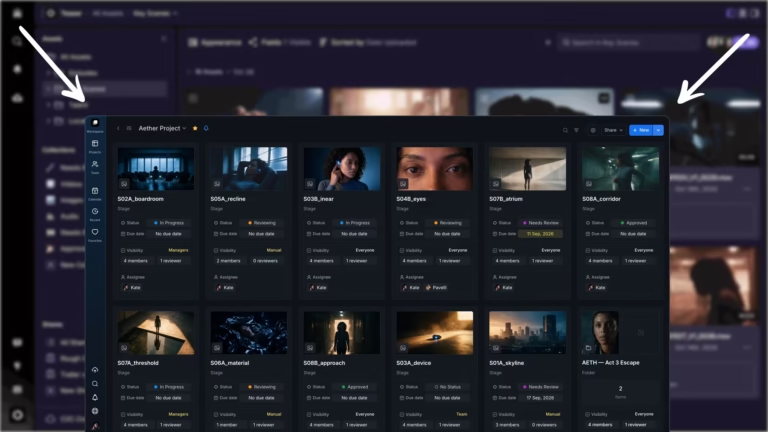
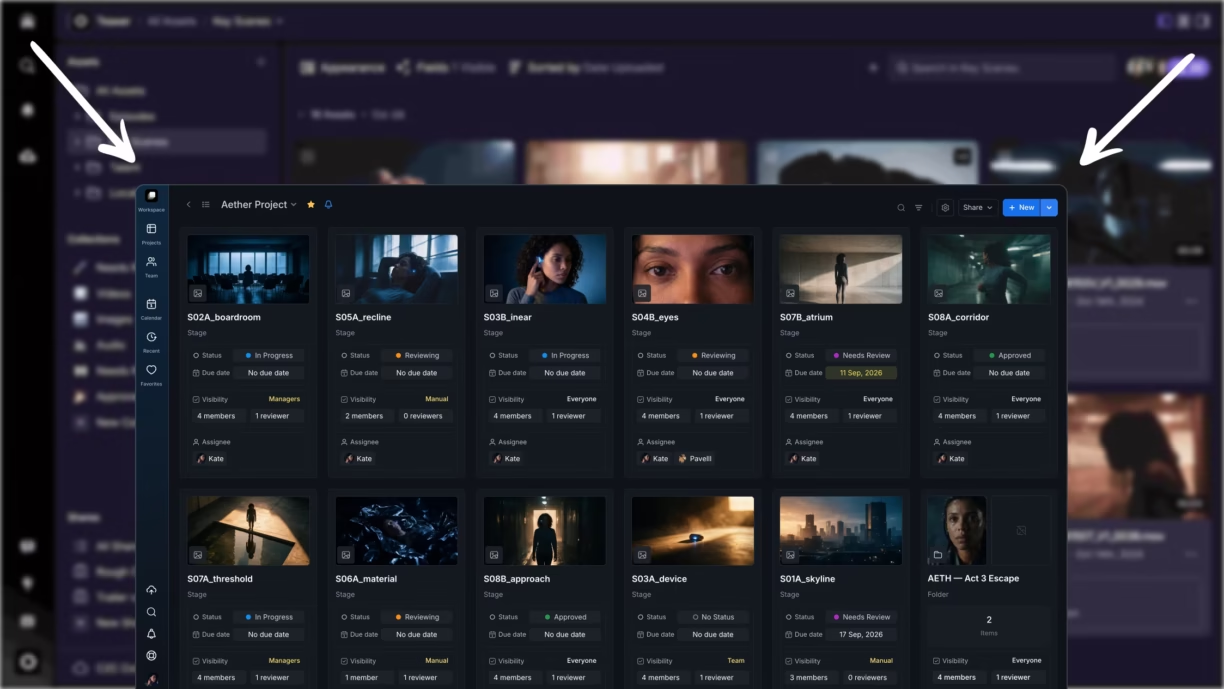
Krock.io is built for the same core video review and collaboration workflow you’re already used to, plus project management, customizable workflows, storyboarding, and integrations with the editing tools your production team already uses. And if you’ve accumulated hundreds of timecoded comments in Frame.io, you don’t have to recreate them by hand — you can export them as an EDL file and import them directly into Krock.io.
This guide walks through the migration step by step: what to move first, how to transfer your Frame.io comments, how to bring your team and clients over, and how to run your first review cycle without disrupting active projects.
Still comparing the two platforms? See our detailed Krock.io vs Frame.io comparison. Looking for a broader list of options? Check the best Frame.io alternatives.
Before you migrate: you don’t need to move everything
The easiest way to switch platforms isn’t migrating your entire history overnight. Start with your active projects.
Divide your Frame.io workspace into three groups:
1. Active projects — currently in production or review. Migrate these first.
2. Recently completed projects — move them only if your team still needs regular access to the files or feedback.
3. Archived projects — you probably don’t need to recreate every project you’ve completed over the past few years. Keep an archive of anything important and focus your migration effort on what your team is actively working on.
Tip: Start with one active project. Once your team is comfortable with Krock.io, migrate the rest at your own pace.
Quick Frame.io → Krock.io migration checklist
Here’s the whole process at a glance:
- Download the media you need from Frame.io
- Export the Frame.io comments you want to preserve
- Create the corresponding project in Krock.io
- Upload your media
- Import comments using EDL
- Recreate your project stages and workflow
- Invite your team
- Invite clients and reviewers
- Connect your editing software
- Run your next review cycle in Krock.io
The part most teams care about most is the feedback history. Here’s how to transfer it.
How to transfer Frame.io comments to Krock.io
If your Frame.io project already contains a lot of timecoded feedback, you don’t want your editors to lose that context. Krock.io lets you import comments from an EDL file, so you can transfer timecoded feedback instead of manually recreating every comment.
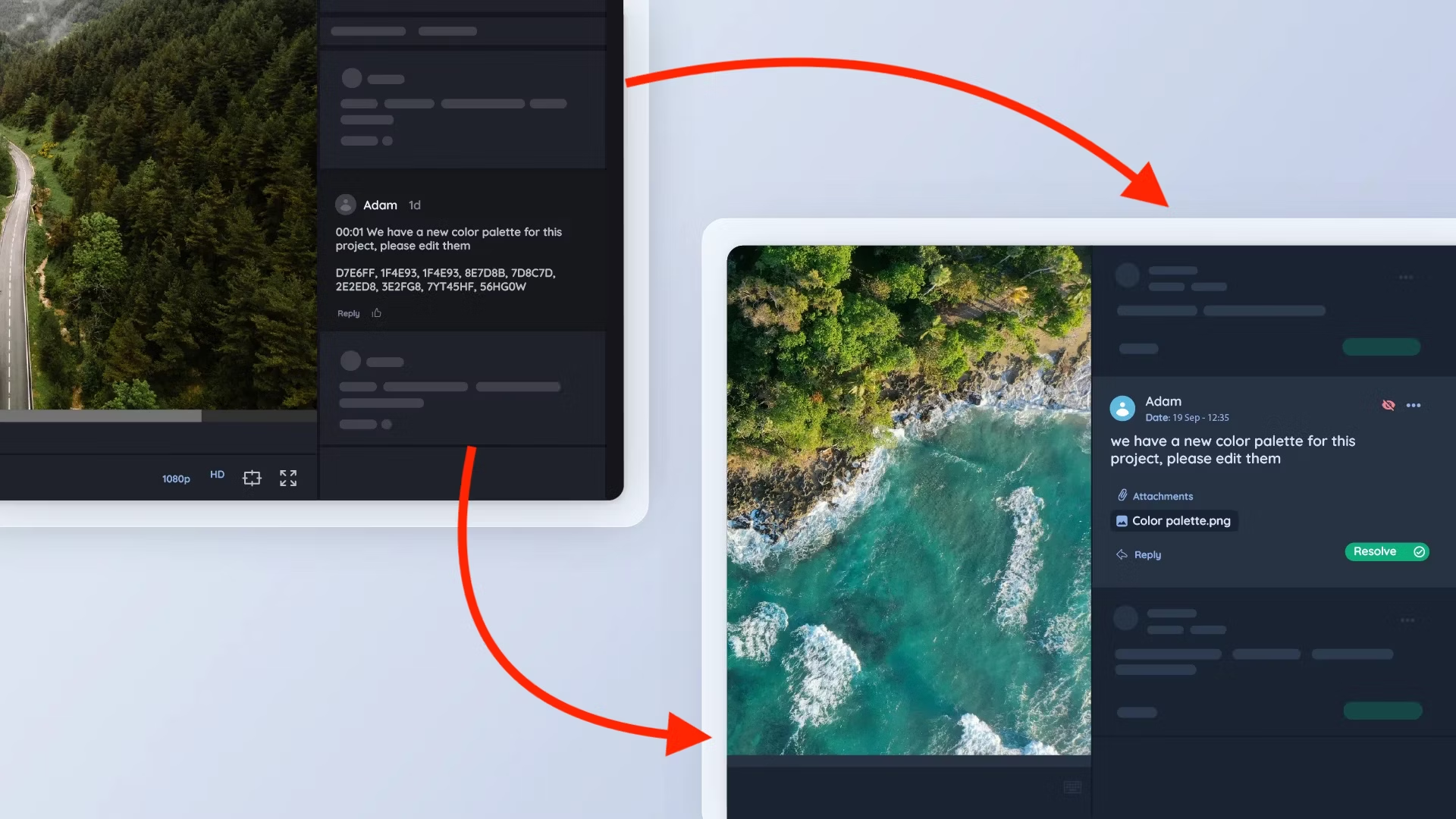
Step 1: Open your project in Frame.io
Open the Frame.io project and navigate to the video version that contains the comments you want to migrate.
Check your comment filters first. If you’ve filtered the comments view, review the filters before exporting — for a complete migration, make sure you’re not accidentally exporting only a subset of your feedback.
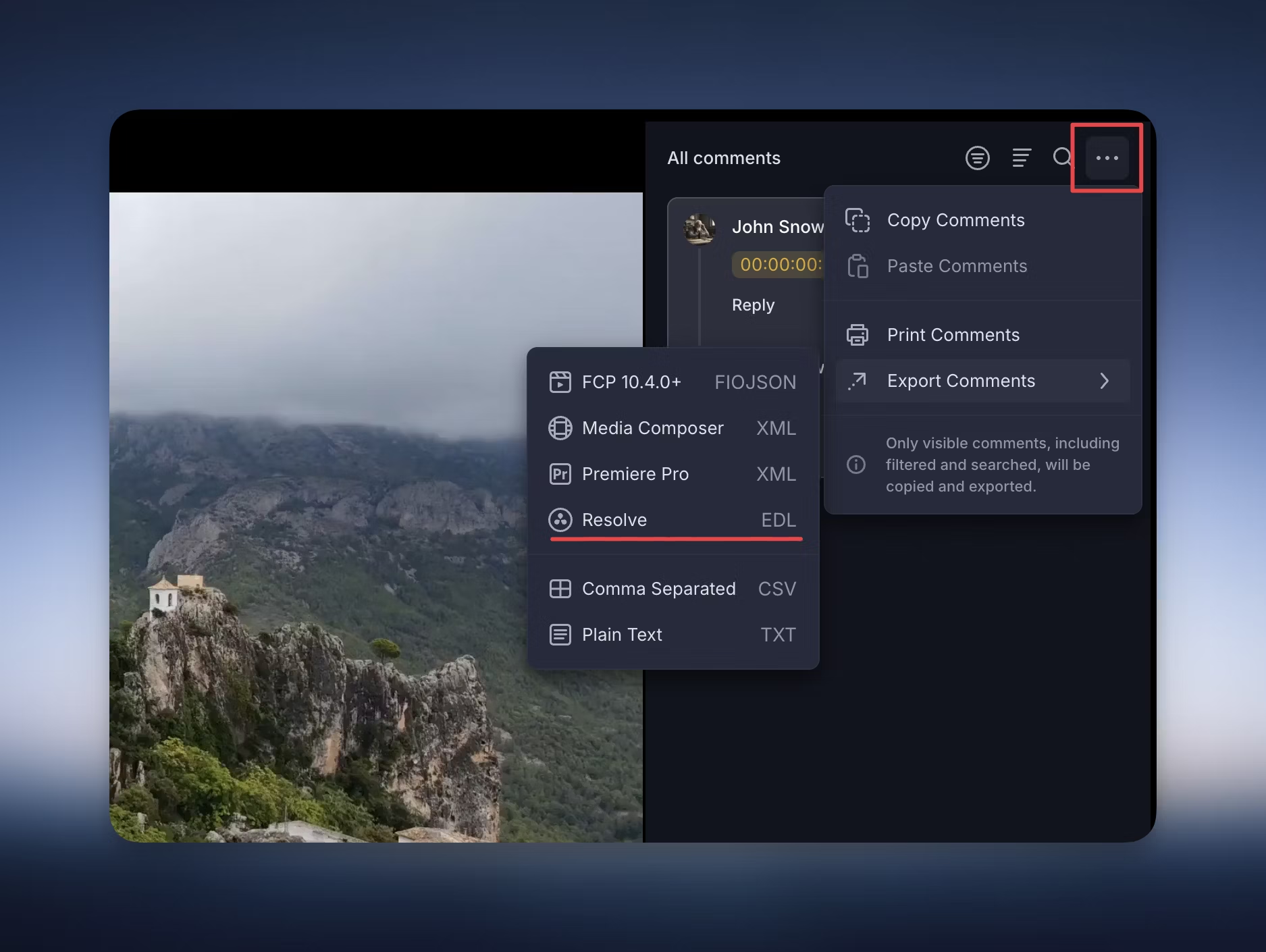
Step 2: Export your Frame.io comments as EDL
In Frame.io, open the comment export options and choose the EDL export. Download the resulting file and give it a name that makes it easy to identify later, for example:
Project_Name_V03_Frame.io_Comments.edl
This file becomes the bridge between your Frame.io feedback and your Krock.io project.
Step 3: Create the corresponding project in Krock.io
Create a new project in Krock.io that mirrors your Frame.io project. Then set up the workflow stages you actually need — you don’t have to reproduce your old folder structure exactly. For example:
Storyboard → Production → Internal Review → Client Review → Final
Krock.io’s stages let you organize the project around how your team actually produces the work, not just where the files live.
Step 4: Upload the corresponding video to Krock.io
Upload the video version associated with the comments you’re migrating. It’s important that you import the EDL against the matching video version, so the timecodes in the comments line up correctly with the media.
Step 5: Import your Frame.io comments into Krock.io
Open the video in Krock.io, go to the Comments panel, and open the comments menu. Select Import comments EDL, then upload the file you exported from Frame.io. Krock.io uses the EDL data to recreate the timecoded comments on the video.
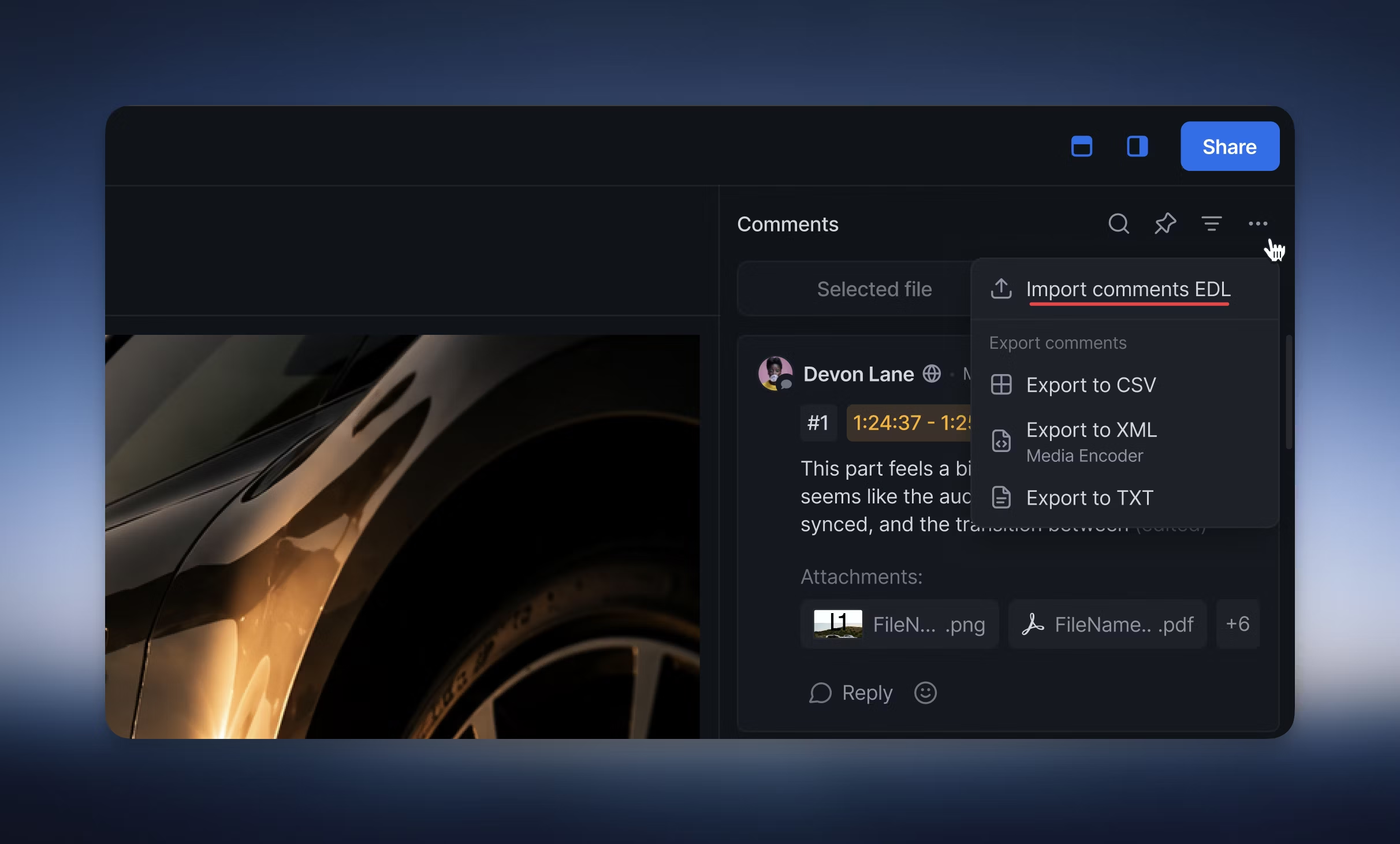
Instead of manually copying comments one by one, the process becomes:
Frame.io → Export EDL → Krock.io → Import EDL
That can save a significant amount of manual work when migrating an active project with a large volume of feedback.
What actually transfers — and what doesn’t
Be precise about this before you promise your team a seamless migration. An EDL-based import is built to carry timecoded marker information reliably. It is not necessarily a full export of every layer of a Frame.io discussion.
| Information | EDL migration |
|---|---|
| Timecode | ✅ |
| Comment text | ✅ |
| Comment date | ✅ |
| Author | ✅ |
| Replies / discussion threads | ✅ |
Moving your media from Frame.io to Krock.io
Once your comments are handled, moving the actual files is straightforward. For each active project:
- Download the required source files or video versions from Frame.io.
- Create the corresponding project in Krock.io. Use templates to speed up the migration process.
- Upload the files.
- Organize them into the appropriate stages.
- Import comments where needed.
- Continue your next review cycle in Krock.io.
You don’t need to migrate every old version. If a project has V01 through V04 plus a Final, and only V04 is still relevant, decide whether the earlier versions need to move or can simply stay archived in Frame.io.
Recreate your workflow — or improve it
This is where switching to Krock.io becomes more than just changing your review tool. Instead of recreating your Frame.io folders exactly, think about your actual production process. A typical video production workflow might look like:
Brief → Storyboard → Production → Internal Review → Client Review → Revisions → Approved → Final
Setting this up as stages in Krock.io lets your team manage the production process around the media itself, instead of running a separate project management tool alongside your review platform.
Move your team and clients
After creating the project, invite the people who need access — but you don’t need to give everyone access to your entire workspace. For a migration, start with:
Internal team — producers, editors, designers, animators, and anyone directly producing the work.
External collaborators — freelancers and partners working directly on the project.
Reviewers — clients and stakeholders who only need to review and approve, not manage the project.
This lets you move your existing collaboration model into Krock.io gradually, instead of asking everyone to change how they work all at once.
Connect Krock.io to your editing software
If your team works directly inside an NLE, this is another important part of the migration. Krock.io has live plugins and integrations for:
- Adobe Premiere Pro
- Adobe After Effects
- DaVinci Resolve
- Final Cut Pro
With the Adobe integration, for example, your team can view and manage Krock.io feedback while editing instead of constantly switching between the browser and the editing application — so editors can keep working with the same feedback-driven process they’re already used to, just pointed at Krock.io instead of Frame.io.
Don’t migrate your entire company at once
Pick one active project and run its next full review cycle in Krock.io, while keeping Frame.io available for everything else:
Upload V01 → Send to client → Collect comments → Make revisions →
Upload V02 → Resolve feedback → Approve
Then check the basics: Can the editor see feedback from the NLE? Can the client comment without friction? Are notifications working? Does the review link work end to end? Once that project runs cleanly, migrate the next one. This is far less disruptive than trying to move an entire workspace in one weekend.
What should you keep in Frame.io?
You don’t need to delete your Frame.io account immediately. For completed projects, it often makes sense to keep an archive for historical reference — final deliverables, previous versions, important client feedback, approval records, and anything you might need to revisit later.
The goal of migration isn’t to move every file you’ve ever uploaded. It’s to move your active production workflow to Krock.io, and let the historical archive stay exactly where it is.
Your first Frame.io → Krock.io migration
If you’re ready to test the process, start with one active project:
- Choose a project with a manageable number of files.
- Export important comments from the relevant Frame.io version as EDL.
- Create the project in Krock.io and set up your stages.
- Upload the video.
- Import the EDL — Comments panel → Import comments EDL.
- Verify the comments at a few different timecodes to confirm the import worked as expected.
- Invite your team.
- Invite your client to the appropriate project.
- Run the next review entirely in Krock.io.
- Migrate the next project once your team is comfortable.
Frequently asked questions
Can I migrate my Frame.io comments to Krock.io?
Yes. Krock.io supports importing comments from an EDL file. Export the relevant comments from Frame.io and import the EDL into the corresponding Krock.io video.
Do I need to manually recreate all my comments?
No. For comment data supported by the EDL export, you can import it directly into Krock.io instead of retyping every note by hand.
Do comment attachments migrate?
No. Files attached to a Frame.io comment aren’t included in the EDL export. Download any attachments you need and re-upload them to the corresponding Krock.io project.
Can I migrate an active project?
Yes — an active project is actually a good place to start, since it lets you test the full Krock.io workflow with your real team and a real client.
Do I have to migrate every Frame.io project?
No. Prioritize active projects and keep completed ones archived in Frame.io if you don’t need daily access to them.
Will Frame.io replies and attachments migrate?
Don’t assume all discussion history transfers through EDL. Test your specific export first, and keep important historical discussions archived in Frame.io if they include detail the EDL doesn’t capture.
Can I keep using Frame.io while I move to Krock.io?
Yes. A gradual, project-by-project migration is easier for most teams than switching everything at once.
Can my clients use Krock.io without learning a complicated new tool?
Yes. Clients open a review link and can leave comments without creating an account.
Can I use Krock.io with Premiere Pro, After Effects, or DaVinci Resolve?
Yes. Krock.io integrates with Adobe Premiere Pro, After Effects, DaVinci Resolve, and Final Cut Pro.
Ready to move from Frame.io?
You don’t have to migrate everything at once. Start with one active project, transfer your existing feedback, invite your team, and run your next review cycle in Krock.io. If it fits your workflow, migrate the rest of your projects at your own pace.
Still weighing the decision rather than the logistics? See what Krock.io costs and includes next to Frame.io before you start.